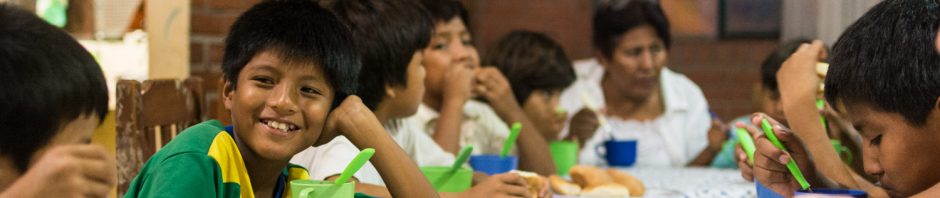
Thousands of children sleep on the streets or in the drains of Santa Cruz de la Sierra, Bolivia. They often have to steal or beg for their food in order to survive.
My name is Annie Syrett-Jones and in late 2006 I spent nearly six months in Santa Cruz as part of my degree course, working with the Alalay Foundation, an organisation working with street-connected children.
I soon realised that Alalay was relatively poor and very dependent on donations – the staff were sometimes unpaid for long periods and money was often short for vital items such as educational materials. Which is why I was determined to help them, and why I started the UK-registered charity “Friends of Alalay (Santa Cruz)†which directly supports the Alalay organisation.
Our mission: helping Bolivian street kids to help themselves.
This will be realised in two main ways:
a) Providing education and skills development, preserving health and meeting other needs of ex-street children at Alalay.
b) Identifying, establishing and monitoring practical production projects which will become self-financing and teach new skills to the children.
See our main projects for 2025 HERE or find out what we have previously achieved HERE.
Friends of Alalay is unusual amongst charities in that ALL of the money raised goes directly to help the children – nothing is spent on administration.
Do watch our 30-minute documentary “Alalay: Children of the Cold” to find out more about Alalay’s work, my charity and previous supported projects: